









中国农业科技导报 ›› 2025, Vol. 27 ›› Issue (11): 205-215.DOI: 10.13304/j.nykjdb.2024.0282
• 生物制造 资源生态 • 上一篇
王雅婷( ), 杨清()
收稿日期:2024-04-08
接受日期:2024-09-24
出版日期:2025-11-15
发布日期:2025-11-17
通讯作者:
杨清
作者简介:王雅婷 E-mail:18294165867@163.com;
基金资助:
Yating WANG(), Qing YANG()
Received:2024-04-08
Accepted:2024-09-24
Online:2025-11-15
Published:2025-11-17
Contact:
Qing YANG
摘要:
为揭示耕地生产、生活和生态(“三生”)空间耦合协调程度及其空间分布特征,通过构建耕地“三生”空间综合评价指标,利用熵权法确定指标权重,借助耦合度和耦合协调度模型,测算甘肃省2013—2022年的耕地“三生”空间耦合度和耦合协调度,分析其时序演变的趋势特征和变动原因,利用ArcGis绘制2013、2016、2019和2022年甘肃省14个市(州)的耕地“三生”空间耦合协调度分布图,探究其空间分布特点。结果表明,耕地“三生”空间综合发展水平差异大,生产空间综合发展水平呈“U”型,发展水平下降后稳步回升;生活空间综合发展水平呈“L”型,呈高开低走态势;生态空间综合发展水平呈“M”型,发展水平日趋低下。从时序演变来看,耕地“三生”空间总体处于低协调发展状态,2013—2022年耦合协调度总体呈“V”型,2013年耦合协调度最高,达到0.800 2, 2015年耦合协调度最低,为0.534 6;2013—2014、2019—2022年均实现了协调发展,其中,2013年为优质协调,2015—2018年处于濒临失调状态。在空间格局上,甘肃省中西部多呈濒临失调状态,东南部以“抱团式”的初级失调状态为主,耦合协调状态存在显著区域差异。以上结果表明,应结合耕地资源分布格局,以差异化耕地管控措施为基础,从据实设置种收补贴范围、适度机械化入田、农作物多样化种植、提高社会化服务水平等方面促进耕地“三生”空间实现耦合协调发展。
中图分类号:
王雅婷, 杨清. 黄河上游耕地“三生”空间耦合协调时空演变特征分析[J]. 中国农业科技导报, 2025, 27(11): 205-215.
Yating WANG, Qing YANG. Analysis of Temporal and Spatial Evolution Characteristics of Coupling Coordination of Cultivated Land “Production-living-ecological ”Space in Upper Reaches of Yellow River ——A Case Study of Gansu Province[J]. Journal of Agricultural Science and Technology, 2025, 27(11): 205-215.
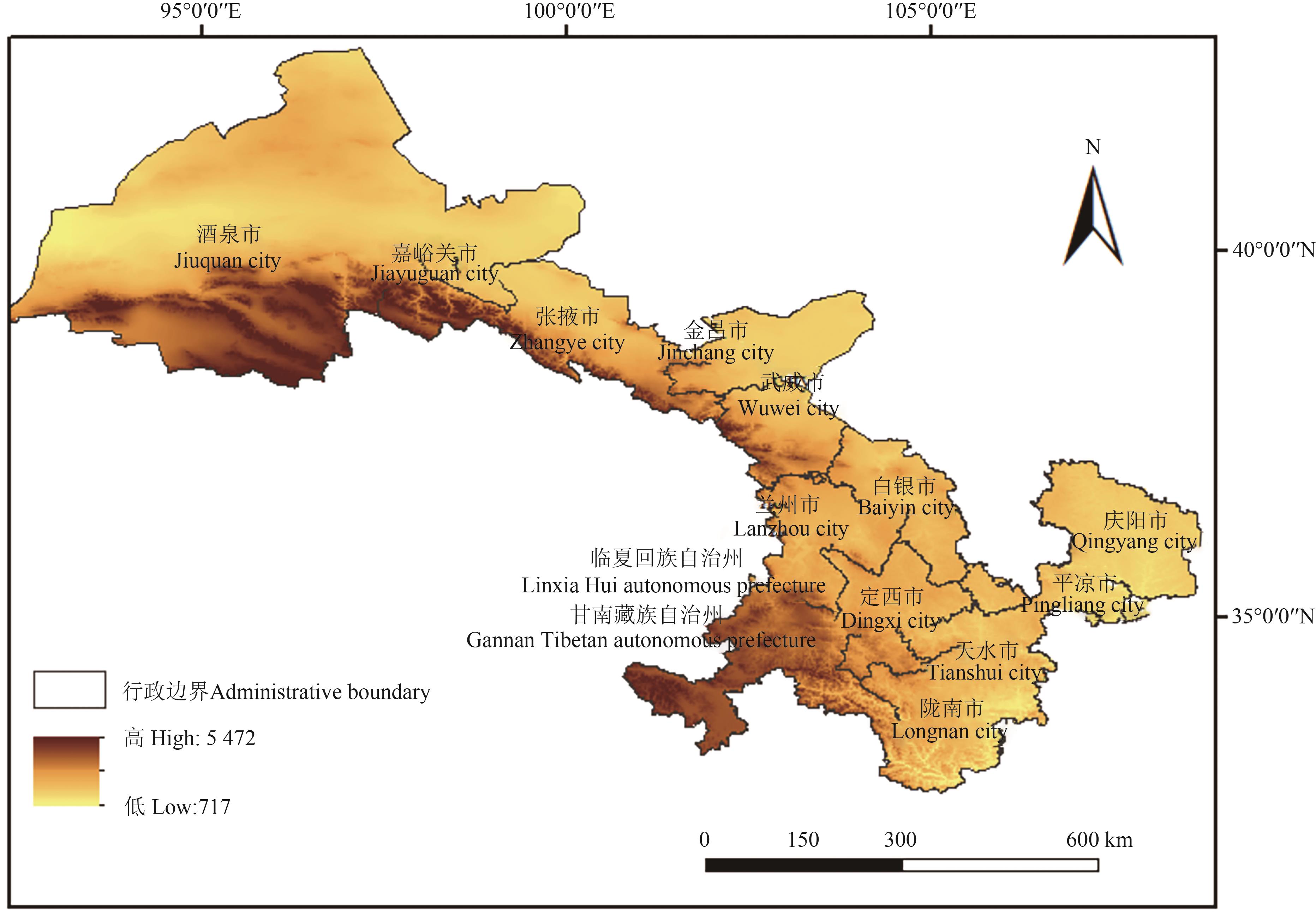
图 1 甘肃省行政区划及高程图注:本图基于中华人民共和国民政部官网全国行政区划信息查询平台下载的审图号为GS(2022)1873号的标准地图制作,底图无修改。
Fig. 1 Administrative divisions and elevation map of Gansu provinceNote:This map is based on the standard map No.GS(2022)1873 downloaded from the National Administrative Division Information Inquiry Platform of the official website of the Ministry of Civil Affairs, PRC. The base map has not been modified.
一级指标 Primary index | 二级指标 Secondary index | 指标说明 Indicator specification | 属性 Attribute | 权重 Weight/ % |
|---|---|---|---|---|
生产空间 Productin space | 粮食单位面积产量 Grain yield per unit area/(kg·hm | 粮食总产量/粮食作物实际占用耕地面积 Total grain output/atual cultivated land occupied by grain crops | + | 6.943 6 |
耕地地均产值/(万元·hm Average output value of cultivated land/(104 yuan·hm | 农业总产值/耕地总面积 Total agricultural output value/total cultivated area | + | 8.572 9 | |
耕地种植指数 Cultivated land planting index/% | 年播种面积/耕地总面积 Annual sown area/total cultivated area | + | 9.339 7 | |
土地开垦率 Land reclamation rate/% | 耕地总面积/土地总面积 Total cultivated area/total land area | + | 6.708 8 | |
生活空间 Living space | 人均粮食保有量/(kg·人 Grain stock per capita/(kg·person | 粮食总产量/(总人口×400) Total grain production/(total population ×400) | + | 8.304 6 |
家庭农业收入占比 Share of household farm income/% | 家庭人均农业收入/农业人均可支配收入 Household per capita agricultural income/agricultural per capita disposable income | + | 25.694 8 | |
人均农业机械化水平/(kW·人 Agricultural mechanization level per capita/(kW·person | 农业机械总动力/总人口 Total power of agricultural machinery/total population | - | 6.593 8 | |
耕地地劳比/(hm2·人 Labor ratio of cultivated land/(hm2·person | 耕地总面积/总人口 Total cultivated area/total population | + | 4.691 4 | |
生态空间 Ecological space | 农田生态系统多样性 Farmland ecosystem diversity/% | + | 4.672 2 | |
耕地占生态用地比重 Proportion of cultivated land in ecological land use/% | 耕地总面积/(土地总面积-建设用地面积) Total cultivated area/(total land area-construction land area) | + | 6.450 1 | |
耕地利用化学负荷 Chemical load of cultivated land use/(kg·hm | 1/2×(化肥施用量+农用地膜覆盖量)/耕地总面积 1/2×(fertilizer application amount + agricultural mulch cover amount)/total cultivated area | - | 5.185 0 | |
耕地开发强度 Cultivated land development intensity/% | 建设用地面积/耕地总面积 Construction land area/total cultivated area | - | 6.843 0 |
表 1 耕地“三生”空间综合评价指标体系
Table 1 Index system of comprehensive evaluation of cultivated land “production-living-ecological”space
一级指标 Primary index | 二级指标 Secondary index | 指标说明 Indicator specification | 属性 Attribute | 权重 Weight/ % |
|---|---|---|---|---|
生产空间 Productin space | 粮食单位面积产量 Grain yield per unit area/(kg·hm | 粮食总产量/粮食作物实际占用耕地面积 Total grain output/atual cultivated land occupied by grain crops | + | 6.943 6 |
耕地地均产值/(万元·hm Average output value of cultivated land/(104 yuan·hm | 农业总产值/耕地总面积 Total agricultural output value/total cultivated area | + | 8.572 9 | |
耕地种植指数 Cultivated land planting index/% | 年播种面积/耕地总面积 Annual sown area/total cultivated area | + | 9.339 7 | |
土地开垦率 Land reclamation rate/% | 耕地总面积/土地总面积 Total cultivated area/total land area | + | 6.708 8 | |
生活空间 Living space | 人均粮食保有量/(kg·人 Grain stock per capita/(kg·person | 粮食总产量/(总人口×400) Total grain production/(total population ×400) | + | 8.304 6 |
家庭农业收入占比 Share of household farm income/% | 家庭人均农业收入/农业人均可支配收入 Household per capita agricultural income/agricultural per capita disposable income | + | 25.694 8 | |
人均农业机械化水平/(kW·人 Agricultural mechanization level per capita/(kW·person | 农业机械总动力/总人口 Total power of agricultural machinery/total population | - | 6.593 8 | |
耕地地劳比/(hm2·人 Labor ratio of cultivated land/(hm2·person | 耕地总面积/总人口 Total cultivated area/total population | + | 4.691 4 | |
生态空间 Ecological space | 农田生态系统多样性 Farmland ecosystem diversity/% | + | 4.672 2 | |
耕地占生态用地比重 Proportion of cultivated land in ecological land use/% | 耕地总面积/(土地总面积-建设用地面积) Total cultivated area/(total land area-construction land area) | + | 6.450 1 | |
耕地利用化学负荷 Chemical load of cultivated land use/(kg·hm | 1/2×(化肥施用量+农用地膜覆盖量)/耕地总面积 1/2×(fertilizer application amount + agricultural mulch cover amount)/total cultivated area | - | 5.185 0 | |
耕地开发强度 Cultivated land development intensity/% | 建设用地面积/耕地总面积 Construction land area/total cultivated area | - | 6.843 0 |
耦合阶段 Coupling phase | 协调水平 Coordination level | 范围 Range |
|---|---|---|
高水平耦合阶段 High level coupling stage | 优质协调 High quality coordination | 0.8≤D≤1 |
磨合阶段 Run-in stage | 中度协调Moderate coordination 初级协调 Primary coordination 濒临失调 Borderline dysregulation | 0.7≤D<0.8 0.6≤D<0.7 0.5≤D<0.6 |
拮抗阶段 Antagonistic stage | 初级失调 Primary dysregulation | 0.3≤D<0.5 |
低水平耦合阶段 Low level coupling stage | 中度失调 Moderate dysregulation | D<0.3 |
表 2 耕地“三生”空间耦合协调度划分标准
Table 2 Division standard of coupling coordination degree of cultivated land “production-living-ecological”space
耦合阶段 Coupling phase | 协调水平 Coordination level | 范围 Range |
|---|---|---|
高水平耦合阶段 High level coupling stage | 优质协调 High quality coordination | 0.8≤D≤1 |
磨合阶段 Run-in stage | 中度协调Moderate coordination 初级协调 Primary coordination 濒临失调 Borderline dysregulation | 0.7≤D<0.8 0.6≤D<0.7 0.5≤D<0.6 |
拮抗阶段 Antagonistic stage | 初级失调 Primary dysregulation | 0.3≤D<0.5 |
低水平耦合阶段 Low level coupling stage | 中度失调 Moderate dysregulation | D<0.3 |

图 2 耕地“三生”空间综合发展水平
Fig. 2 Comprehensive development level of cultivated land “production-living-ecological”space
年份 Year | C:耦合度 Coupling degree | D:耦合协调度 Coupling coordination degree | 协调水平 Coordination level |
|---|---|---|---|
| 2013 | 0.984 3 | 0.800 2 | 优质协调High quality coordination |
| 2014 | 0.993 5 | 0.794 0 | 中度协调Moderate coordination |
| 2015 | 0.787 8 | 0.534 6 | 濒临失调Borderline dysregulation |
| 2016 | 0.849 0 | 0.593 5 | 濒临失调Borderline dysregulation |
| 2017 | 0.870 6 | 0.567 0 | 濒临失调Borderline dysregulation |
| 2018 | 0.860 9 | 0.591 6 | 濒临失调Borderline dysregulation |
| 2019 | 0.827 4 | 0.610 1 | 初级协调Primary coordination |
| 2020 | 0.957 6 | 0.610 7 | 初级协调Primary coordination |
| 2021 | 0.940 1 | 0.645 2 | 初级协调Primary coordination |
| 2022 | 0.911 6 | 0.663 8 | 初级协调Primary coordination |
表 3 耕地“三生”空间耦合协调水平
Table 3 Spatial coupling coordination level of cultivated land “production-living-ecological”space
年份 Year | C:耦合度 Coupling degree | D:耦合协调度 Coupling coordination degree | 协调水平 Coordination level |
|---|---|---|---|
| 2013 | 0.984 3 | 0.800 2 | 优质协调High quality coordination |
| 2014 | 0.993 5 | 0.794 0 | 中度协调Moderate coordination |
| 2015 | 0.787 8 | 0.534 6 | 濒临失调Borderline dysregulation |
| 2016 | 0.849 0 | 0.593 5 | 濒临失调Borderline dysregulation |
| 2017 | 0.870 6 | 0.567 0 | 濒临失调Borderline dysregulation |
| 2018 | 0.860 9 | 0.591 6 | 濒临失调Borderline dysregulation |
| 2019 | 0.827 4 | 0.610 1 | 初级协调Primary coordination |
| 2020 | 0.957 6 | 0.610 7 | 初级协调Primary coordination |
| 2021 | 0.940 1 | 0.645 2 | 初级协调Primary coordination |
| 2022 | 0.911 6 | 0.663 8 | 初级协调Primary coordination |

图 3 甘肃省耕地“三生”空间耦合协调度空间分布注:本图基于中华人民共和国民政部官网全国行政区划信息查询平台下载的审图号为GS(2022)1873号的标准地图制作,底图无修改。
Fig. 3 Spatial distribution of coupling coordination degree of cultivated land “production-living-ecological” space of Gansu provinceNote:This map is based on the standard map No.GS(2022)1873 downloaded from the National Administrative Division Information Inquiry Platform of the official website of the Ministry of Civil Affairs, PRC. The base map has not been modified.
| [1] | 中共中央 国务院关于建立国土空间规划体系并监督实施的若干意见[EB/OL].(2019-05-23)[2024-03-06]. . |
| [2] | 许伟. “三生空间”的内涵、关系及其优化路径[J].东岳论丛, 2022,43(5):126-134. |
| [3] | 江曼琦,刘勇. “三生”空间内涵与空间范围的辨析[J].城市发展研究, 2020, 27(4): 43-48, 61. |
| JIANG M Q, LIU Y. Discussion on the concept definition and spatial boundary classification of “production-living-ecological” space [J]. Urban Dev. Stud., 2020, 27(4): 43-48, 61. | |
| [4] | 鲁达非,江曼琦.中国城市“三生”空间高质量建设目标内涵解析[J].河北学刊,2024,44(3):147-156. |
| LU D F, JIANG M Q. Analysis on the connotation of the objectives under high-quality construction of “production-living-ecological” space in Chinese cities [J]. Hebei Acad. J., 2024, 44(3): 147-156. | |
| [5] | 董雅文,周雯,周岚,等.城市化地区生态防护研究——以江苏省、南京市为例[J].城市研究, 1999(2): 6-8, 10. |
| [6] | 邓红兵,陈春娣,刘昕,等.区域生态用地的概念及分类[J].生态学报,2009,29(3):1519-1524. |
| DENG H B, CHEN C D, LIU X, et al.. Conception and function classification of regional ecological land [J].Acta Ecol. Sin.,2009, 29(3):1519-1524. | |
| [7] | 李文娅,何勇,李聪聪,等.基于核心-边缘的重庆国土“三生”空间时空格局演变[J].智能城市,2023,9(9):48-51. |
| LI W Y, HE Y, LI C C, et al..The “production-living-ecologica” space of Chongqing’s land based on core edge evolution of spatiotemporal pattern [J]. Intelligent City, 2023,9(9): 48-51. | |
| [8] | 宋小青,欧阳竹.耕地多功能内涵及其对耕地保护的启示[J].地理科学进展,2012,31(7):859-868. |
| SONG X Q, OUYANG Z. Connotation of multifunctional cultivated land and its implications for cultivated land protection [J]. Progress Geogr., 2012,31(7):859-868. | |
| [9] | 邹永偲,兰安军,范泽孟,等. “三生空间”视角下贵州省景观生态安全评价及其耦合特征分析[J].水土保持研究,2024,31(3):432-442. |
| ZOU Y C, LAN A J, FAN Z M, et al.. Evaluation of landscape ecologica security and its coupling characteristics analysis in Guizhou province from the perspective of production-living-ecology space [J]. Res. Soil Water Conserv., 2024, 31(3):432-442. | |
| [10] | 杨健.基于“三生空间”的宁波市土地利用结构分析[J].测绘与空间地理信息,2023,46(10):203-206. |
| YANG J. Analysis of land use structure in Ningbo city based on“Sansheng Space” [J]. Geomatics Spatial Inform. Technol., 2023, 46(10): 203-206. | |
| [11] | 朱庆莹,陈银蓉,胡伟艳,等.中国土地集约利用与区域生态效率耦合协调度时空格局[J].农业工程学报,2020,36(4):234-243. |
| ZHU Q Y, CHEN Y R, HU W Y,et al..Spatiotemporal pattern of coupling coordination degree between land intensive use and regional ecological efficiency in China [J]. Trans. Chin. Soc.Agric. Eng., 2020, 36(4):234-243. | |
| [12] | 王欣然. “三生空间”背景下全域土地综合整治路径研究——以金寨县面冲村为例[C]//中国城市规划学会.人民城市,规划赋能——2022中国城市规划年会论文集(16乡村规划).安徽建筑大学,2023: 9. |
| [13] | 陈正发,史东梅,何伟,等. 1980—2015年云南坡耕地资源时空分布及演变特征分析[J].农业工程学报,2019,35(15):256-265. |
| CHEN Z F, SHI D M, HE W, et al..Spatio-temporal distribution and evolution characteristics of slope farmland resources in Yunnan from 1980 to 2015 [J]. Trans. Chin. Soc. Agric. Eng., 2019, 35(15): 256-265. | |
| [14] | 张宇佳,蔡海生,张学玲,等.鄱阳湖平原耕地多功能时空演变及其驱动机制[J].水土保持通报,2023,43(3):245-253. |
| ZHANG Y J, CAI H S, ZHANG X L,et al..Multi-functional spatiotemporal evolution of cultivated land and its driving mechanisms in Poyang Lake Plain [J].Bull. Soil Water Conserv., 2023, 43(3): 245-253. | |
| [15] | 冯瑛. 基于“三生空间”的玉州区国土空间优化方法探索[J].城市建设理论研究(电子版),2023(25):7-11. |
| [16] | 邹利林,李裕瑞,刘彦随,等. 基于要素视角的耕地“三生”功能理论建构与实证研究[J].地理研究,2021,40(3):839-855. |
| ZOU L L, LI Y R, LIU Y S, et al.. Theory building and empirical research of production-living-ecological function of cultivated land based on the elements [J].Geogr. Res., 2021,40(3):839-855. | |
| [17] | 刘俊祥,张蕾,刘格格,等. 湖北省国土空间“三生”功能权衡特征及影响因素分析[J].水土保持研究,2024,31(2):354‒366, 378. |
| LIU J X, ZHANG L, LIU G G, et al.. Analysis of the trade-off pattern and influencing factors among production-living-ecological functions of territorial space in Hubei province [J]. Res. Soil Water Conserv., 2024, 31(2):354-366. | |
| [18] | 罗莎莎,赖庆标,王旭东,等.基于多功能评价与权衡-协同关系的福建省耕地区划管控[J].农业工程学报,2023,39(13):271-280. |
| LUO S S, LAI Q B, WANG X D, et al.. Control and management of cropland regionalization in Fujian province of China using multi-functional evaluation and trade-off-synergy relationships [J]. Trans. Chin. Soc. Agric. Eng., 2023, 39(13):271-280. | |
| [19] | 李凯迪,袁琳,胡晓,等.京津冀地区三生用地时空格局变化及其生态环境效应[J].生态科学,2023,42(5):94-102. |
| LI K D, YUAN L, HU X, et al..Spatiotemporal dynamics of production-living-ecological land and its impact on the environment in Beijing-Tianjin-Hebei Region [J].Ecol. Sci.,2023, 42(5):94-102. | |
| [20] | 熊昌盛,张永蕾,王雅娟,等.中国耕地多功能评价及分区管控[J].中国土地科学,2021,35(10):104-114. |
| XIONG C S, ZHANG Y L, WANG Y J, et al..Multi-function evaluation and zoning control of cultivated land in China [J].China Land Sci., 2021, 35(10):104-114. | |
| [21] | 高鹏飞,杨朝现,信桂新,等. 三峡库区重庆段国土空间“三生”功能时空演变特征及格局优化[J]. 生态与农村环境学报, 2023, 39(9):1103-1113. |
| GAO P F, YANG C X, XIN G X, et al.. Spatiotemporal evolution characteristics and pattern optimization of production-living-ecological functions of territorial space in Chongqing section of the Three Gorges Reservoir Area [J]. J. Ecol. Rural Environ., 2023, 39(9): 1103-1113. | |
| [22] | 党慧,荣丽华,李伊彤,等.农牧交错区三生空间时空演变特征与影响因素——以内蒙古呼和浩特市为例[J].干旱区研究,2023, 40(10):1698-1706. |
| DANG H, RONG L H, LI Y T, et al.. Spatiotemporal evolution characteristics and influencing factors of production-living-ecological spaces in the farming-pastoral ecotone: taking Hohhot of Inner Mongolia as an example [J].Arid Zone Res., 2023, 40(10):1698-1706. | |
| [23] | 尹琴,黄娟,陈亚颦,等.西南地区“三生”空间功能耦合协调发展水平及时空分异特征[J].乐山师范学院学报,2023, 38(4):107-115. |
| YIN Q, HUANG J, CHEN Y P, et al.. On the coordinated development and space-time difference of PLES function coupling in southwest China [J]. J. Leshan Normal Univ., 2023, 38(4):107-115. | |
| [24] | 宋小青,吴志峰,欧阳竹.1949年以来中国耕地功能变化[J].地理学报,2014,69(4):435-447. |
| SONG X Q, WU Z F, OUYANG Z. Changes of cultivated land function in China since 1949 [J]. Acta Geogr. Sin.,2014, 69(4):435-447. | |
| [25] | 孙新章.新中国60年来农业多功能性演变的研究[J].中国人口·资源与环境,2010,20(1):71-75. |
| SUN X Z.Evolution of agricultural multifuncfionality since 1949 [J].China Popul. Resour. Environ.,2010, 20(1):71-75. | |
| [26] | WIGGERING H, DALCHOW C, GLEMNITZ M. Indicators for multifunctional land use Linking socioeconomic requirements with landscape potentials [J]. Ecol. Indicators, 2006, 6(1):238-249. |
| [27] | 张玥,代亚强,陈媛媛,等.中国耕地多功能耦合协调时空演变及驱动因素[J].农业工程学报,2023, 39(7):244-255. |
| ZHANG Y, DAI Y Q, CHEN Y Y, et al.. Spatial-temporal evolution and driving factors of cultivated landmultifunctional coupling coordination development in China [J].Trans. Chin. Soc. Agric. Eng., 2023, 39(7):244-255. | |
| [28] | 努尔比耶·奥布力艾散, 阿依吐尔逊·沙木西, 艾则买提江·麦麦提图尔荪.和田地区耕地时空演变的生产-生态效应研究[J].农业资源与环境学报, 2024, 41(1):36-48. |
| Ubulhasan Nurbiya, Xamxi Aytursun, Mamattursun Azimatjan. Spatiotemporal evolution of cultivated land production-ecological effects in Hotan Region [J]. J. Agric. Resour. Environ., 2024, 41(1):36-48. | |
| [29] | 王成,彭清,唐宁,等. 2005—2015年耕地多功能时空演变及其协同与权衡研究:以重庆市沙坪坝区为例[J].地理科学,2018,38(4):590-599. |
| WANG C, PENG Q, TANG N, et al.. Spatio-temporal evolution and the synergy and trade-off relationship of cultivated land multi-function in 2005—2015:a case of Shapingba district,Chongqing city [J]. Sci. Geogr. Sin., 2018, 38(4):590-599. | |
| [30] | 甘肃省统计局, 国家统计局甘肃调查总队.甘肃发展年鉴(2014—2023)[R]. 北京:中国统计出版社,2023. |
| [31] | 甘肃农村年鉴编委会.甘肃农村年鉴(2014—2023)[R].北京:中国统计出版社,2023. |
| [32] | 姜广辉,张凤荣,孔祥斌,等.耕地多功能的层次性及其多功能保护[J].中国土地科学,2011,25(8):42-47. |
| JIANG G H, ZHANG F R, KONG X B, et al.. The different levels and the protection of multi-functions of cultivated land [J].China Land Sci., 2011, 25(8):42-47. |
| [1] | 肖淑婷, 颜安. 天山典型天然林土壤有机碳分布特征及其影响因素[J]. 中国农业科技导报, 2025, 27(8): 227-238. |
| [2] | 刘华岩, 申严岩, 郑佳乐, 张路豪, 杨香云, 齐雁冰. 华北平原耕地生产安全评价及生产潜力提升分区[J]. 中国农业科技导报, 2025, 27(10): 180-192. |
| [3] | 宋佳佳, 麻云霞, 郭靖捷, 宝孟克那顺, 谷忠厚, 刘坤, 李治龙, 韩胜利, 康霞, 热瓦迪. 内蒙古黄土丘陵区天然侧柏种群空间格局及种内关联性研究[J]. 中国农业科技导报, 2024, 26(9): 203-212. |
| [4] | 杨小虎, 张曼玉, 杨海昌, 张凤华, 江宜霖, 易小兰. 基于组合模型的玛纳斯河流域农田土壤盐分反演[J]. 中国农业科技导报, 2023, 25(1): 134-141. |
| [5] | 李双, 张伟, 王丽, 李孝军, 崔俊涛. 秸秆还田对不同地力黑土培肥与茎腐病害发生的影响[J]. 中国农业科技导报, 2021, 23(8): 80-90. |
| [6] | 刘星宏, 张青青, 张广鹏, 李宏. 塔里木河下游植物群落空间分布及影响因素分析[J]. 中国农业科技导报, 2021, 23(10): 131-144. |
| [7] | 高素红1,2,武海燕2,温晓蕾2,路常宽2,赵春明2,张琪2,丁元元2. 绿盲蝽越冬卵在葡萄园中的空间分布型和抽样技术研究[J]. 中国农业科技导报, 2020, 22(8): 116-122. |
| [8] | 徐朋1,徐伟诚2,罗阳帆2,赵祚喜2*. 基于无人机可见光遥感影像的耕地精准分类方法研究[J]. 中国农业科技导报, 2019, 21(6): 79-86. |
| [9] | 冯雪莹1,张毅波2,黄玉翠1,郭梦然1,孟烨1,张晓明3,徐海云1*. 雄安新区及其周边地区烟粉虱的种群动态及空间分布格局[J]. 中国农业科技导报, 2019, 21(10): 115-124. |
| [10] | 赵英铭1,2,3,雷渊才4,杨文斌1*,郝玉光2,3,黄雅茹2,3,董雪2,3,马迎宾2,3,刘禹廷2,3. 农田防护林带主根生物量空间分布[J]. 中国农业科技导报, 2018, 20(9): 86-94. |
| [11] | 陈印军,杨俊彦,方琳娜. 我国耕地土壤环境质量状况分析[J]. , 2014, 16(2): 14-18. |
| [12] | 李超1|张祥义2|张海涛3|张利2|王树涛2*. 河北省近20年耕地资源安全动态变化及驱动力分析[J]. , 2014, 16(1): 131-138. |
| [13] | 张瑞福1,2,颜春荣3,张楠1,2,李俊4,沈其荣1,2. 微生物肥料研究及其在耕地质量提升中的应用前景[J]. , 2013, 15(5): 8-16. |
| [14] | 钱贵霞1,晓敏2,赵文哲1,张启峰1,潘月红3*. 后奶业危机时代奶站空间分布变化及其运行状况分析 ——以内蒙古自治区为例[J]. , 2013, 15(4): 102-109. |
| [15] | 杨丽萍1,郭洪海1,李新华1,杨萍1,万书波2. 中国花生蛋白质含量空间分布预测初探[J]. , 2010, 12(5): 92-97. |
| 阅读次数 | ||||||
|
全文 |
|
|||||
|
摘要 |
|
|||||
